
By Juan José Pujana Mena
We usually call the hard parts of a city infrastructure: bridges, roads, pipes, power lines, the viaduct of a metro. We rarely use that word for a tree. I am increasingly convinced we should.
The reason has a name: Medellín. In 2016 the city began building a network of more than thirty green corridors connecting roads, streams, parks and hillsides. In the first phase it planted around 120,000 plants and 12,500 trees, and the programme kept growing. The most quoted result is that average temperatures in the treated areas fell by about 2 °C, and in some spots by more than 3 °C. In 2019 the project won an Ashden Award for nature-based cooling. The judges praised not only the cooling effect but the way it was done: gardeners were hired from vulnerable communities, including people displaced by Colombia’s armed conflict.
Heat is no longer someone else’s problem
For a long time, people in Bogotá thought heat was an issue for other cities. Here the challenge was cold and rain. Yet walk at noon along an avenue with no trees, surrounded by concrete and asphalt, and you will feel that this is no longer entirely true. Urban heat islands exist in cool cities too, and they grow every year.
Why greenery is infrastructure
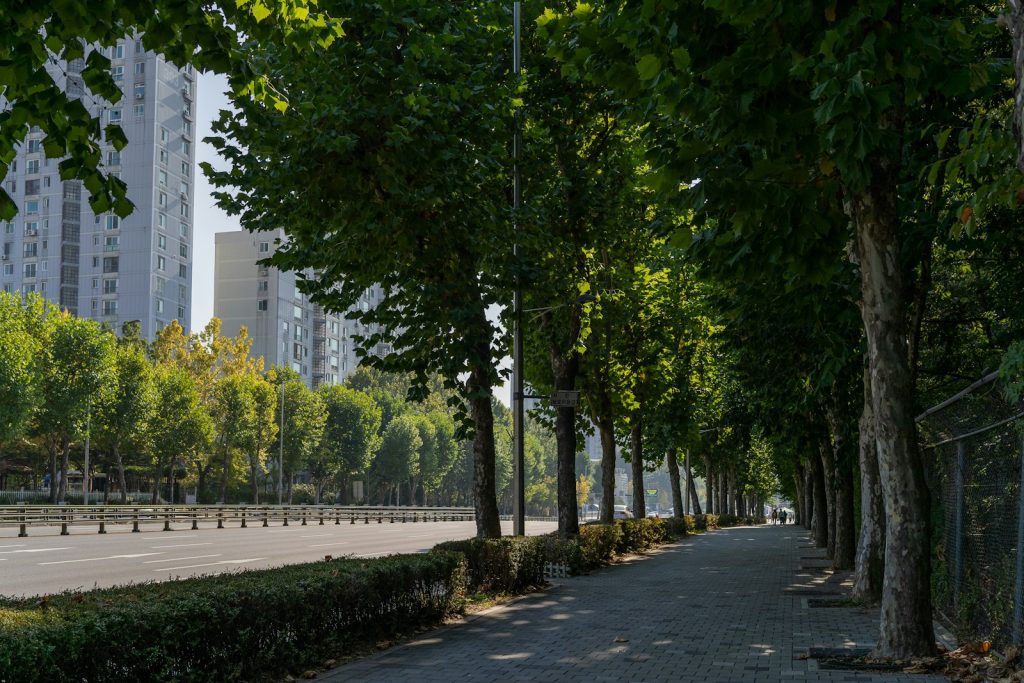
A well-planted tree does work we would otherwise pay for with expensive engineering. It shades and cools. It absorbs rainwater and relieves the drains. It cleans the air. It shelters birds and insects. It makes walking pleasant, and therefore makes people more likely to use public transport. In Medellín, birds, lizards, frogs and bats that had not been seen for years came back.
The corridors initially cost around 16 million US dollars, with annual maintenance of roughly 625,000 dollars in 2022. That is real money. Compared with a single major road project, the cost-benefit ratio is hard to argue with.
A self-criticism from my sector
For decades, in many real estate projects, greenery came last: whatever was left after maximising sellable area, parking and amenities. I think that has to change, and not only for environmental reasons. A building surrounded by good vegetation is cooler, more pleasant and more valuable. A green roof lowers the temperature of the top floor. A tree-lined pavement improves life for everyone on the block.
Trees take years to grow. A tree planted today will give proper shade in ten or fifteen years. So we have to plant now, in every project, every pavement, every urban renewal scheme.
Next time someone says a tree is just decoration, remember that in Medellín that decoration lowered the temperature of whole neighbourhoods by two degrees. Few concrete works can say the same.
Juan José Pujana Mena is a housing developer based in Bogotá, Colombia. More about him.