
By Juan José Pujana Mena
If a visitor asked me what the best thing Bogotá has ever done for its public space is, I wouldn’t point to a building, a bridge or a park. I would tell them to get up early on a Sunday and walk out onto Carrera Séptima.
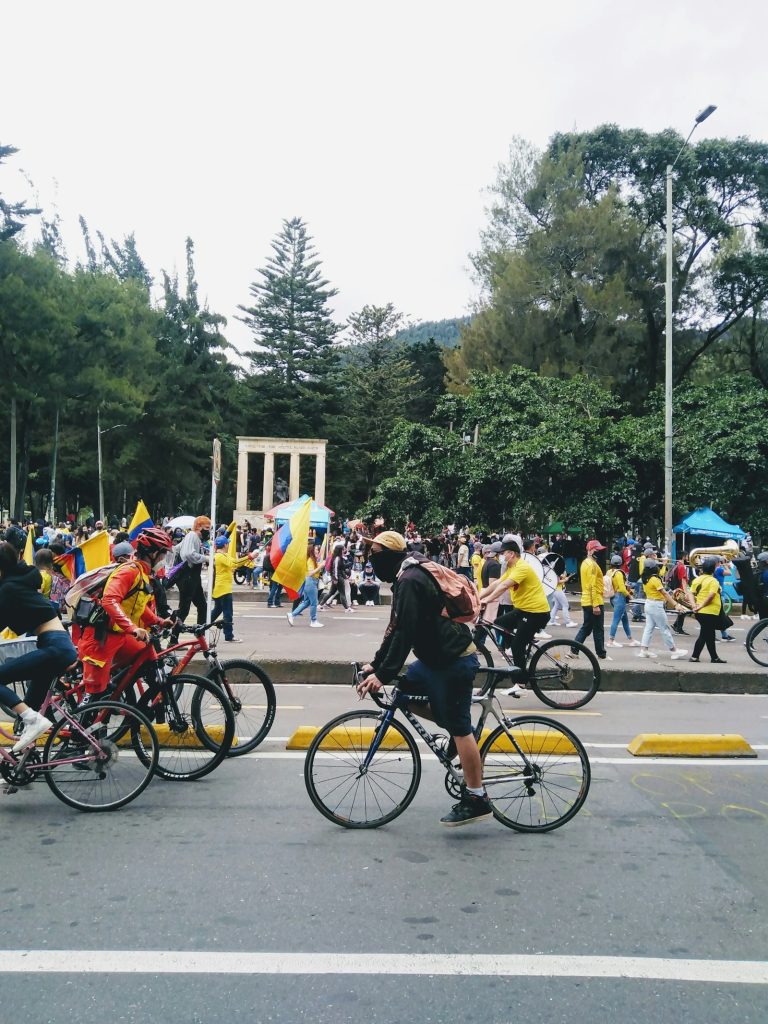
There, between seven in the morning and two in the afternoon, the city changes. Families with toddlers on tricycles, eighty-year-olds pedalling with discipline, runners, skaters, dogs, orange-juice sellers, and people simply walking down the middle of an avenue that is impossible to cross the rest of the week. The Ciclovía is, for me, the city’s most successful public work. And almost nothing had to be built.
An idea that started on the street
It began the way many good things begin: with citizens who insisted. On 15 December 1974, university students from a collective called Procicla organised a mass bike ride to demand room for bicycles in a city increasingly dominated by cars. In June 1976, the mayor signed two decrees that made the programme official. Today, according to April 2026 figures, the network covers 141.46 kilometres every Sunday and public holiday. More than two hundred cities around the world, from New York to Mexico City, have copied the model.
A lesson in humility for builders
As someone who builds for a living, this story always humbles me. In my trade we tend to think that improving a city means putting something up. The Ciclovía proves the opposite. Sometimes the best urban intervention is simply changing the rules for what already exists. The avenues were already there. What changed was a decision: for a few hours, the street belongs to people, not cars.
There is a quieter lesson too. The Ciclovía works because it belongs to everyone. People from the wealthy north and the working-class south ride side by side, and for those hours nobody asks where the other one comes from. In a city as divided as Bogotá, that is worth more than any indicator can show.
What about Monday?
Here is my uncomfortable question. If every Sunday shows us how pleasant the city can be when the street is shared, why do we go back on Monday to accepting broken pavements, dangerous crossings and avenues designed only for cars? Some neighbourhood streets could be pedestrianised for good. Some pavements could be widened. School entrances could be closed to traffic at drop-off time.
When I think about a housing project, I ask how close it is to the Ciclovía, a bike lane or a park within walking distance, and what each building gives back to the street: an active ground floor, a generous pavement, trees. Those details decide whether the city from Monday to Saturday looks a little more like the city on Sunday.
Fifty years on, the Ciclovía is still one of Bogotá’s best arguments for believing in itself.
Juan José Pujana Mena is a housing developer based in Bogotá, Colombia. More about him.